A single winter in the Yukon that feeds half the work — the Klondike stories, the wolf novels, the parable To Build a Fire. How Jack London went north in 1897 and came back another man.
"The land that no one misses who has not been there — and that no one leaves without longing for it."
In the summer of 1897 a steamer from Alaska reached the port of Seattle carrying a ton of gold. Within four weeks roughly a hundred thousand people set out for the north — Jack London, twenty-one years old, broke and just out of the cannery, was one of them. He never panned a single nugget. Instead he spent the winter in a cabin on the Stewart River, reading Milton's Paradise Lost, Darwin's Origin of Species, Marx, Kipling. He watched men break.
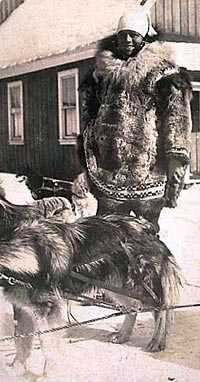
What he brought back from the Yukon was not gold but a stock of images and stories that fed him until 1916: the white silence, the trails of the sled dogs, the frozen breath of a man who has to build a fire. More than a third of his stories are set north of the 60th parallel. In The Call of the Wild Buck learns what lies behind the human; White Fang learns what may come of it.
This theme page gathers what in Jack London comes from the Klondike: the eight central stories, the two great wolf novels, a map of the route, photographs from the family archive, and pointers to his writing on the social conditions of the goldfields.
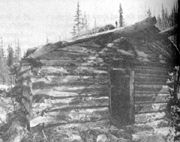
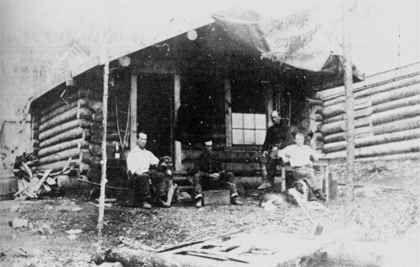
From Seattle via Skagway, the notorious Chilkoot Pass (only crossable if you had a ton of provisions with you), the White Horse rapids, up to Dawson City. London spent the winter in a cabin on the Stewart River, about 130 km downriver from Dawson.
"Day had broken cold and gray, exceedingly cold and gray, when the man turned aside from the main Yukon trail and climbed the high earth-bank …"